Today’s internet customers have more choices that ever before. In many areas, you may now see multiple providers advertising new speeds, new technology, and even fiber internet. That’s a good thing! Competition creates options, but with more options also comes more confusing terminology.
Words like fiber-to-the-home, fiber-powered, fiber-backed and fiber-rich sound impressive, but they don’t all mean the same thing. Understanding the vocabulary can make a big difference in the reliability, speed and performance you actually experience in your home.
At Kudzu Networks, we believe informed members make the best decisions – so let’s break it down.
Not All “Fiber” is the Same
When providers advertise fiber internet, there are typically two very different network designs behind the scenes:
Fiber to the Home (FTTH) = what Kudzu Networks delivers
This means fiber optic cable runs all the way from our network directly to your home. Your internet connection is 100% fiber from start to finish.
Fiber-Powered (Hybrid Fiber Coax) = what many other providers use
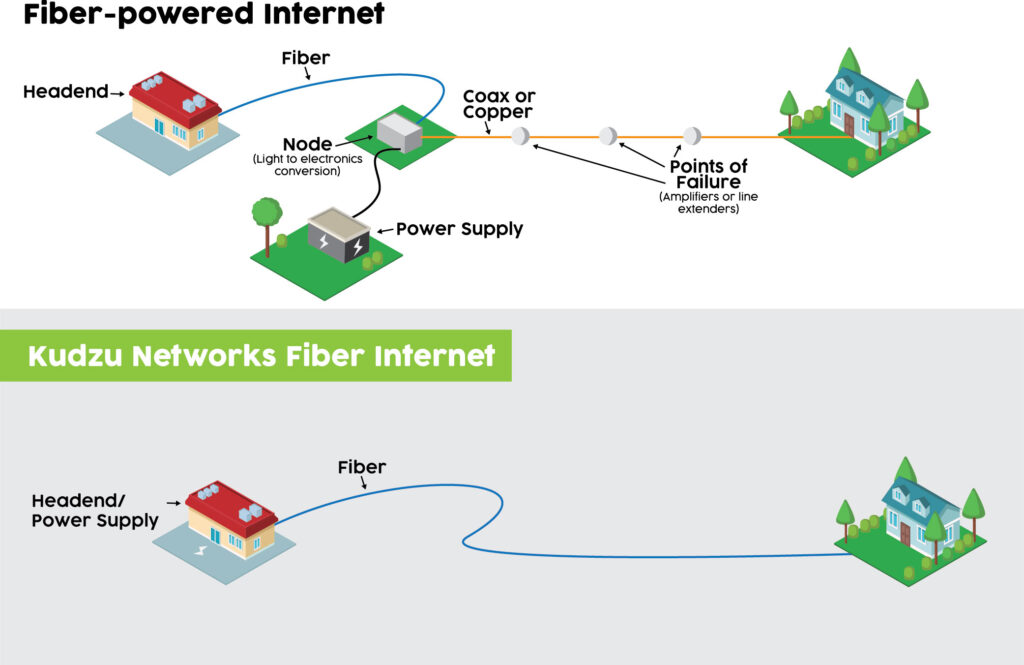
In this setup, fiber runs part of the way to a neighborhood, then switches to coaxial copper cable for the final stretch to your home and others around you.
Yes – fiber-powered is better than older internet technologies, but it still comes with limitations that full fiber does not.
Why Full Fiber Makes a Difference
1.Fewer Power Supplies = Better Reliability
- Fewer Power Supplies = Better Reliability
One of the biggest differences between fiber-to-the-home and fiber-powered networks is how many points of power are required to keep your internet running.
- Kudzu Networks’ fiber-to-the-home: Only two power supplies are needed
- One at our network facility
- One at your home
- Fiber-powered networks: require three or more powered devices between you and the provider
- These additional neighborhood points of power increase the risk of outages
When power goes out, every extra powered connection becomes a potential failure point. Fewer power supplies mean greater reliability, especially during storms or severe weather, which is something our members know matters.
2.No Copper = No “Noise”